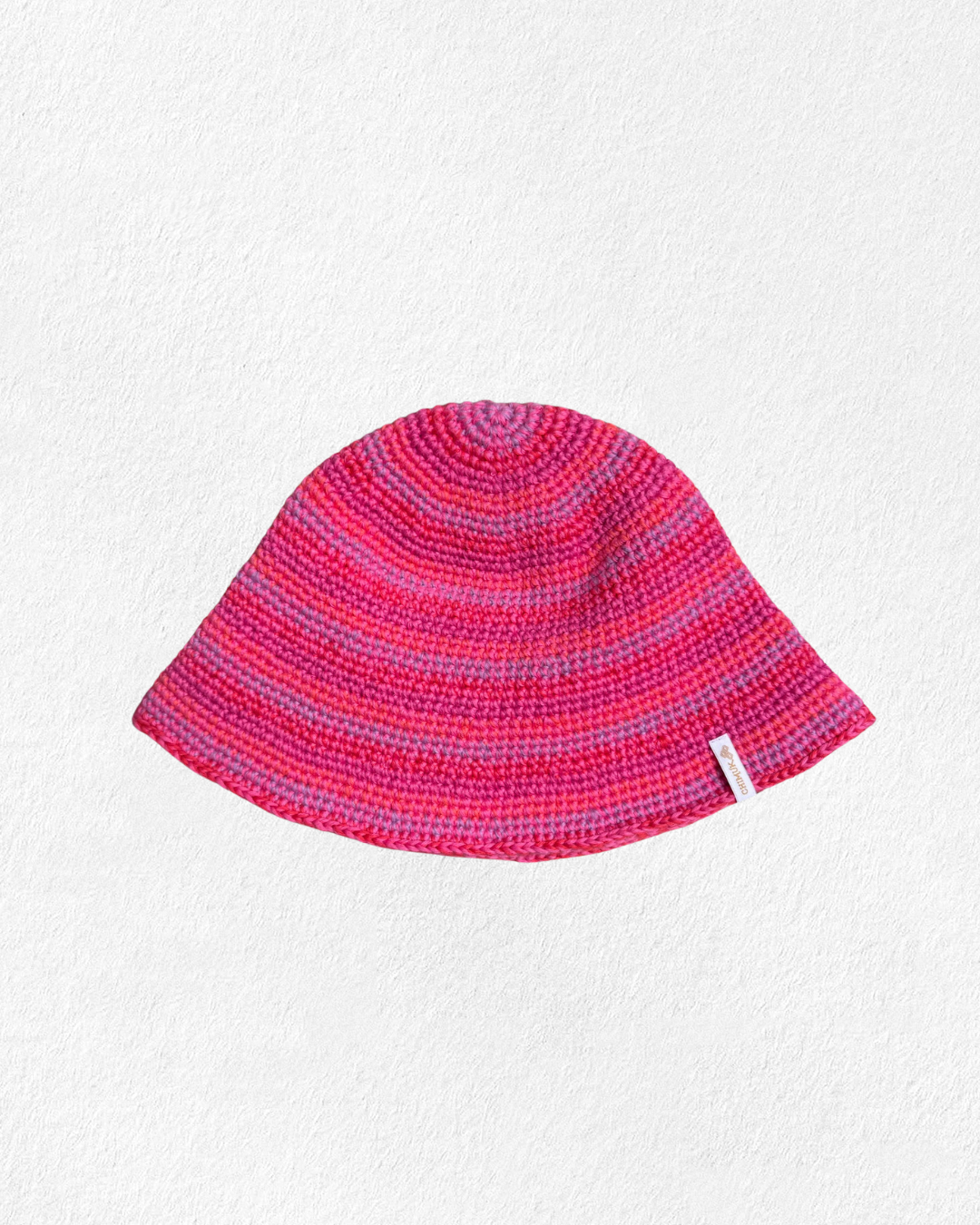
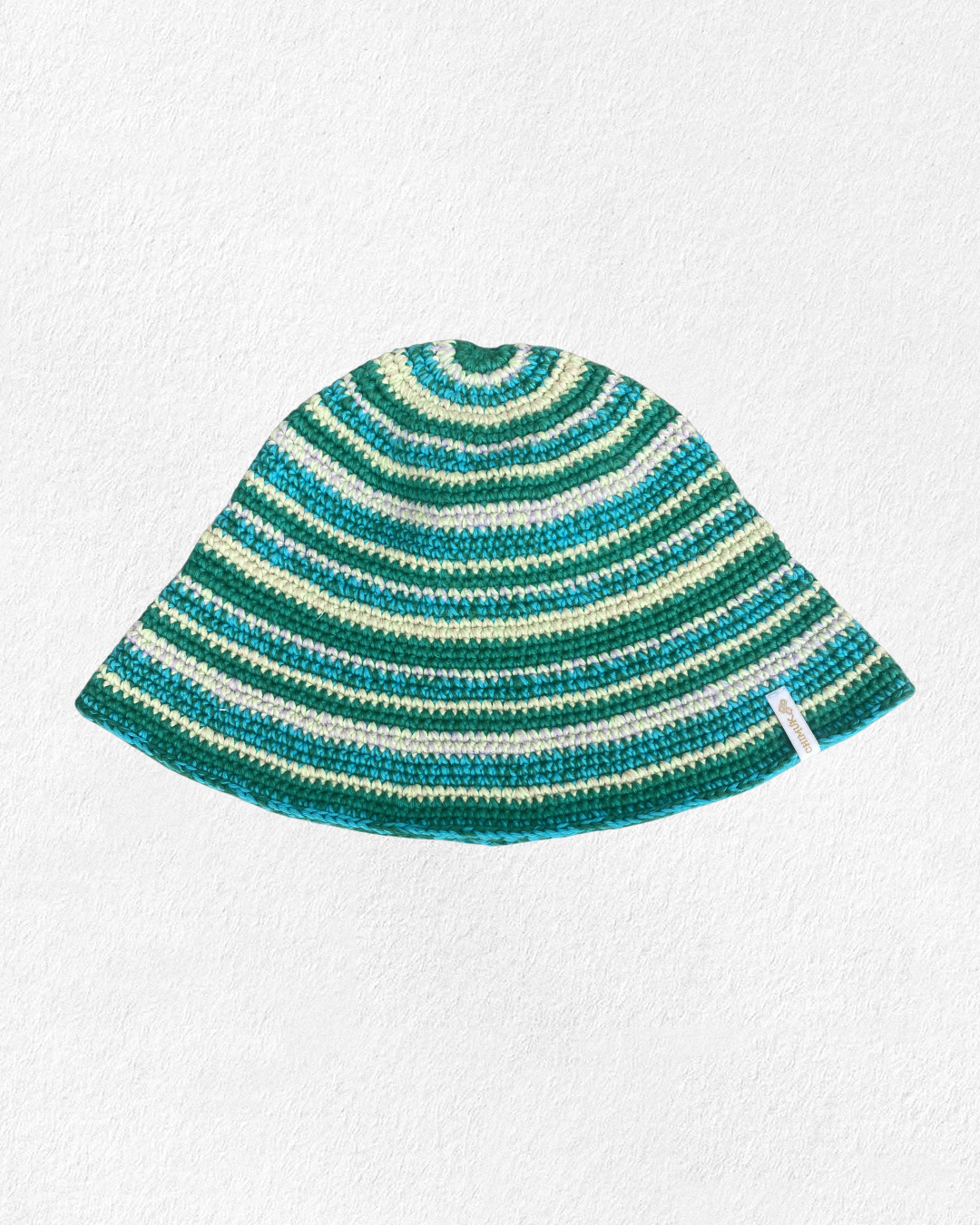
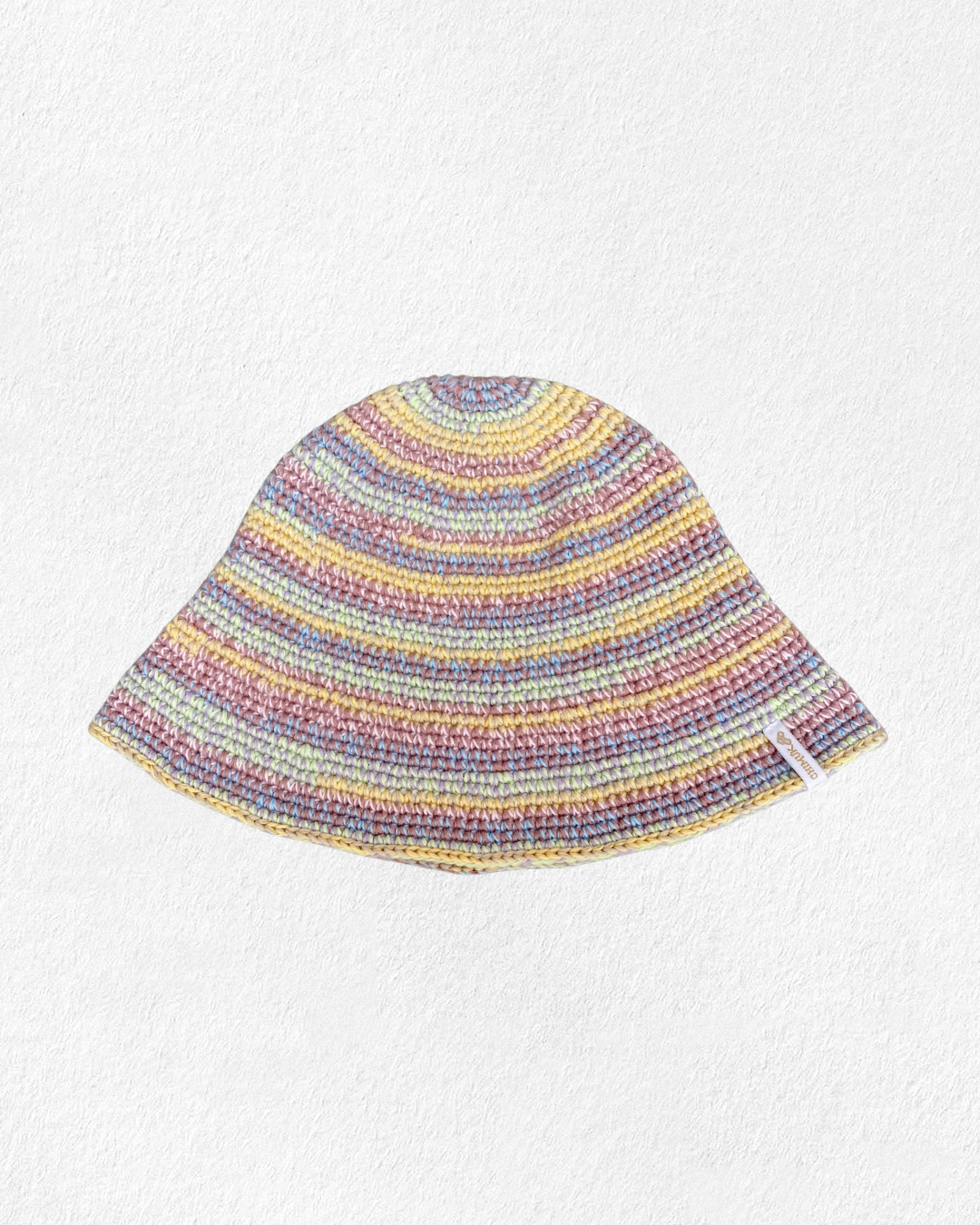
Inside the Colorway: How Every Chimuk Hat Gets Its Colors
Inside the Colorway
How Every Chimuk Hat Gets Its Colors
Every Chimuk multicolor bucket hat starts the same way: a pile of Peruvian cotton yarn and one artisan deciding what happens next.
There's no factory pattern, no fixed formula. Just a woman, her hands, and a color story she's building row by row.
We wanted to know how that story actually comes together.
So we asked the women of Chimuk.
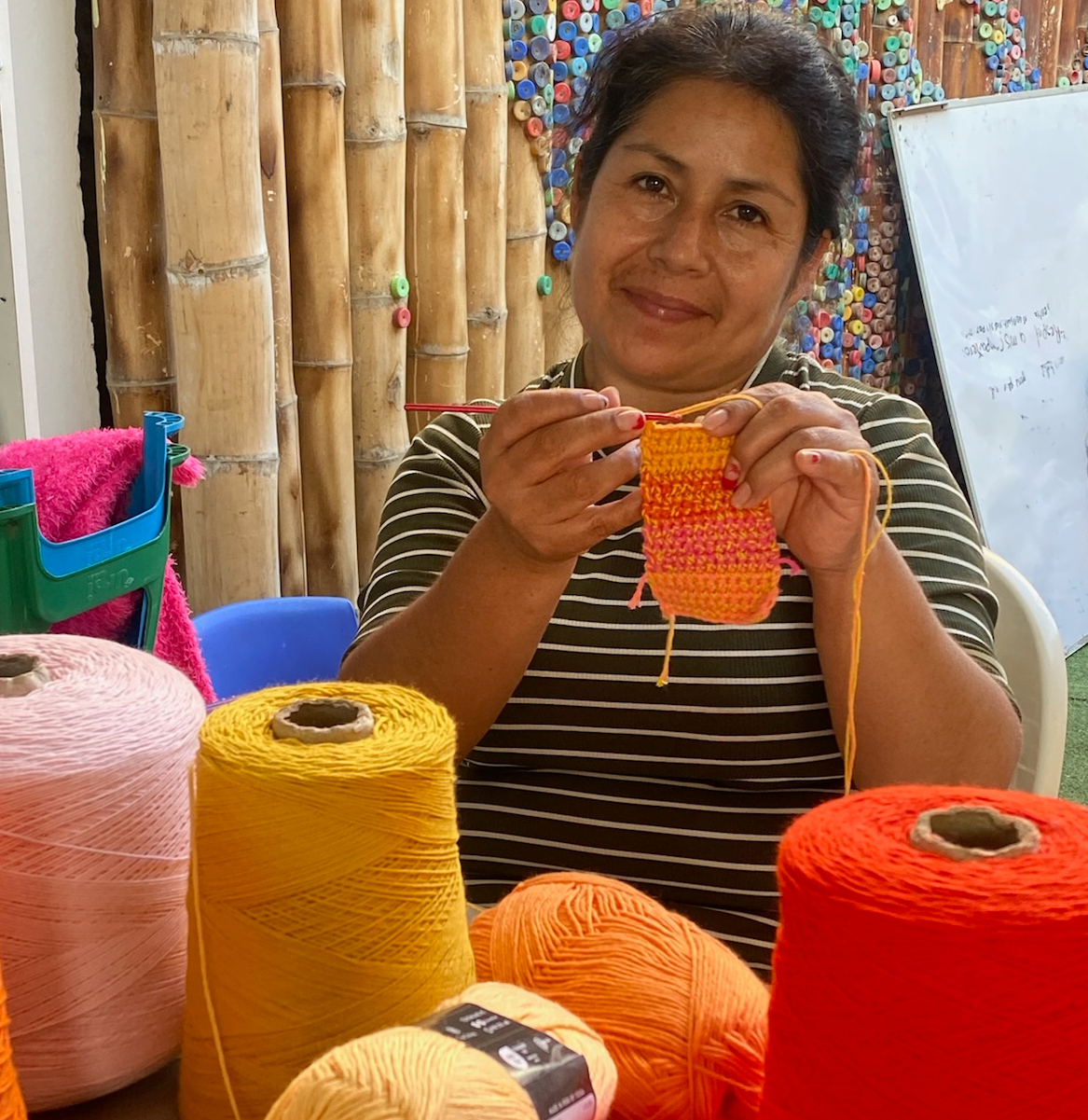
It Starts With a Sample
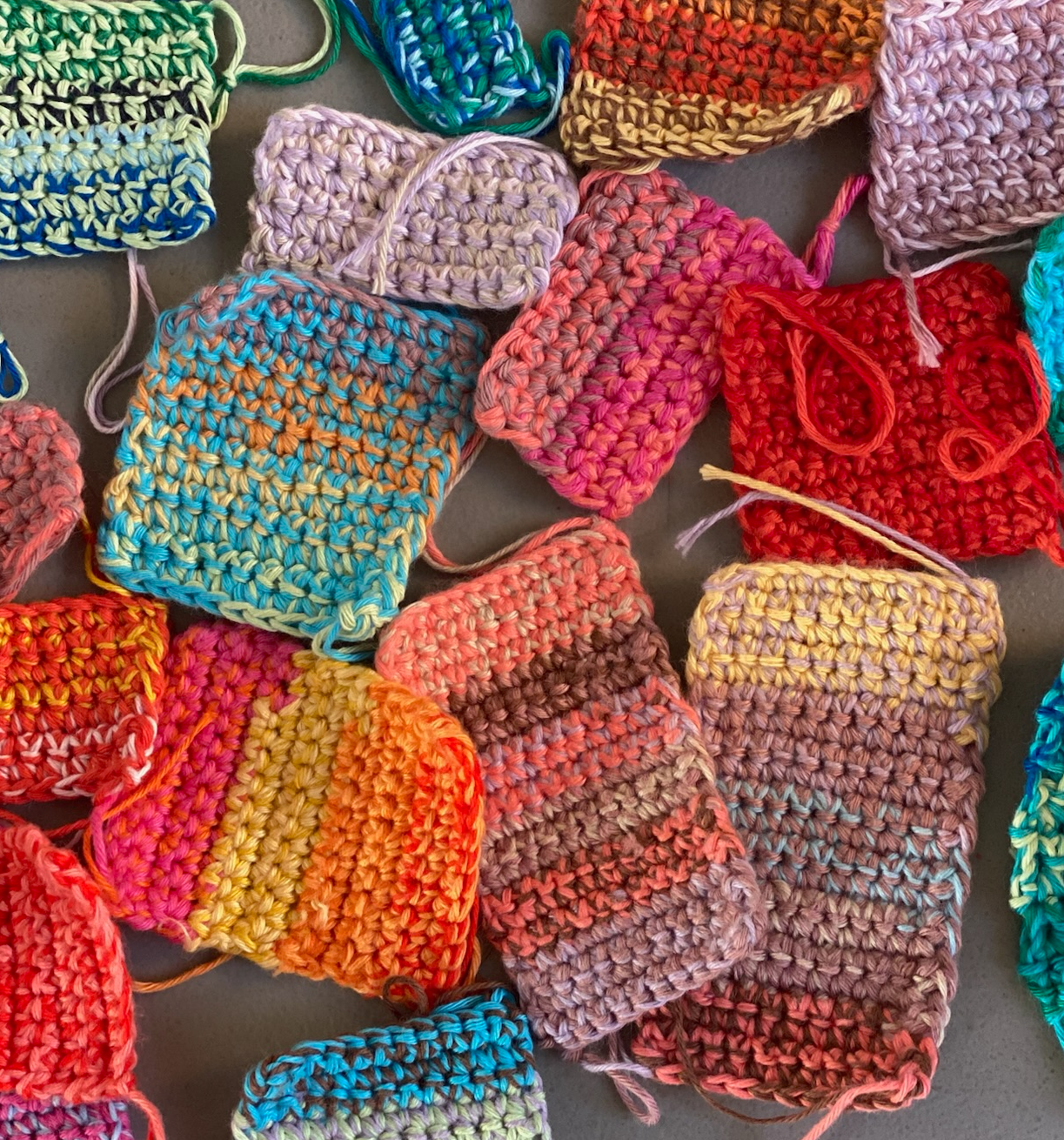
Before a single hat comes together, our artisans make mini samples of different color combinations — small test swatches that let a pairing prove itself before it's committed to a full piece.
This is where the real experimenting happens: trying a shade of pink against a deep green, seeing if a pastel and a brighter tone actually work side by side.
The women come together to spin the yarn, and once a set of samples is ready, the color combinations go into a bag. From there, an artisan takes the bag and decides the order — which shade opens the hat, which one follows, how the whole thing builds row by row.
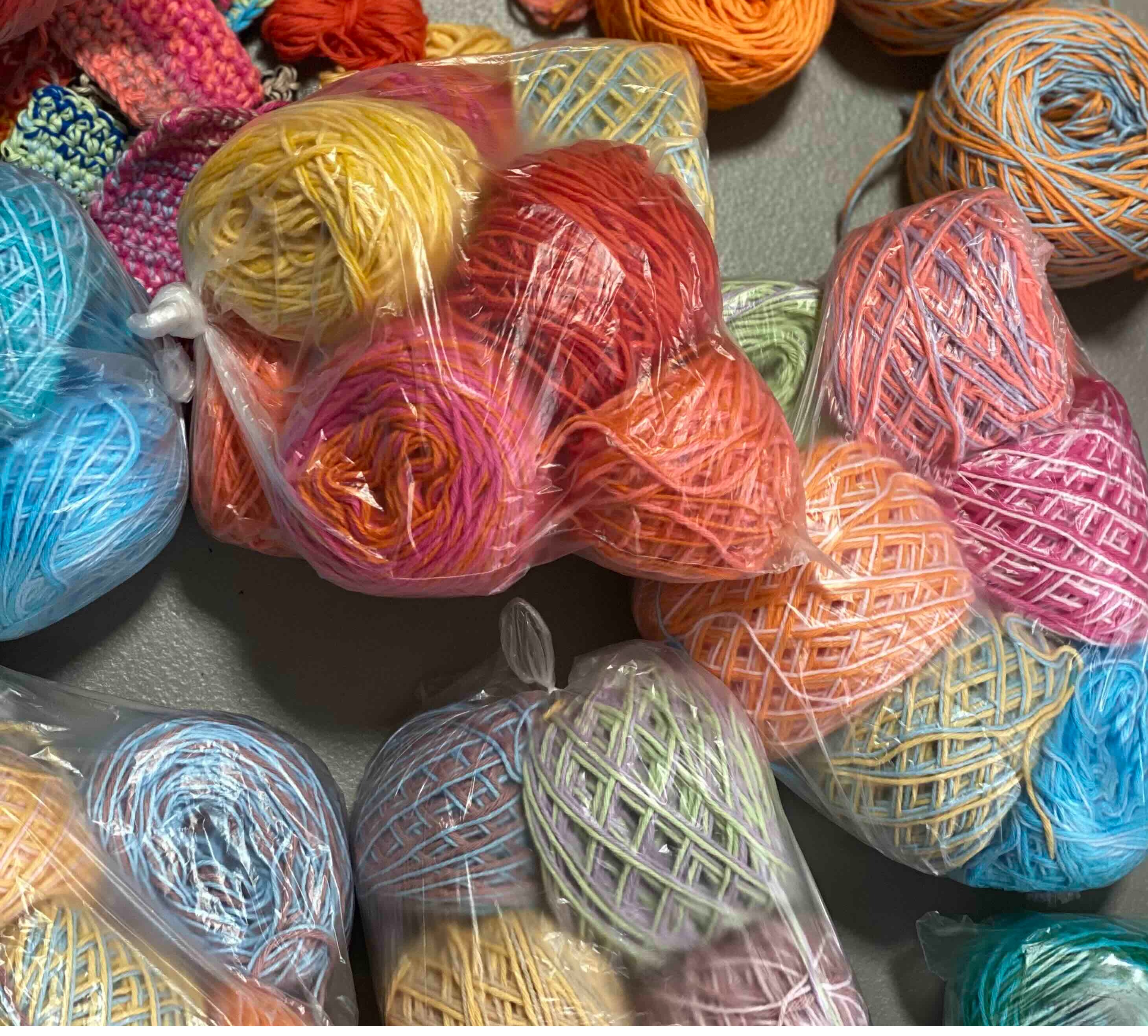
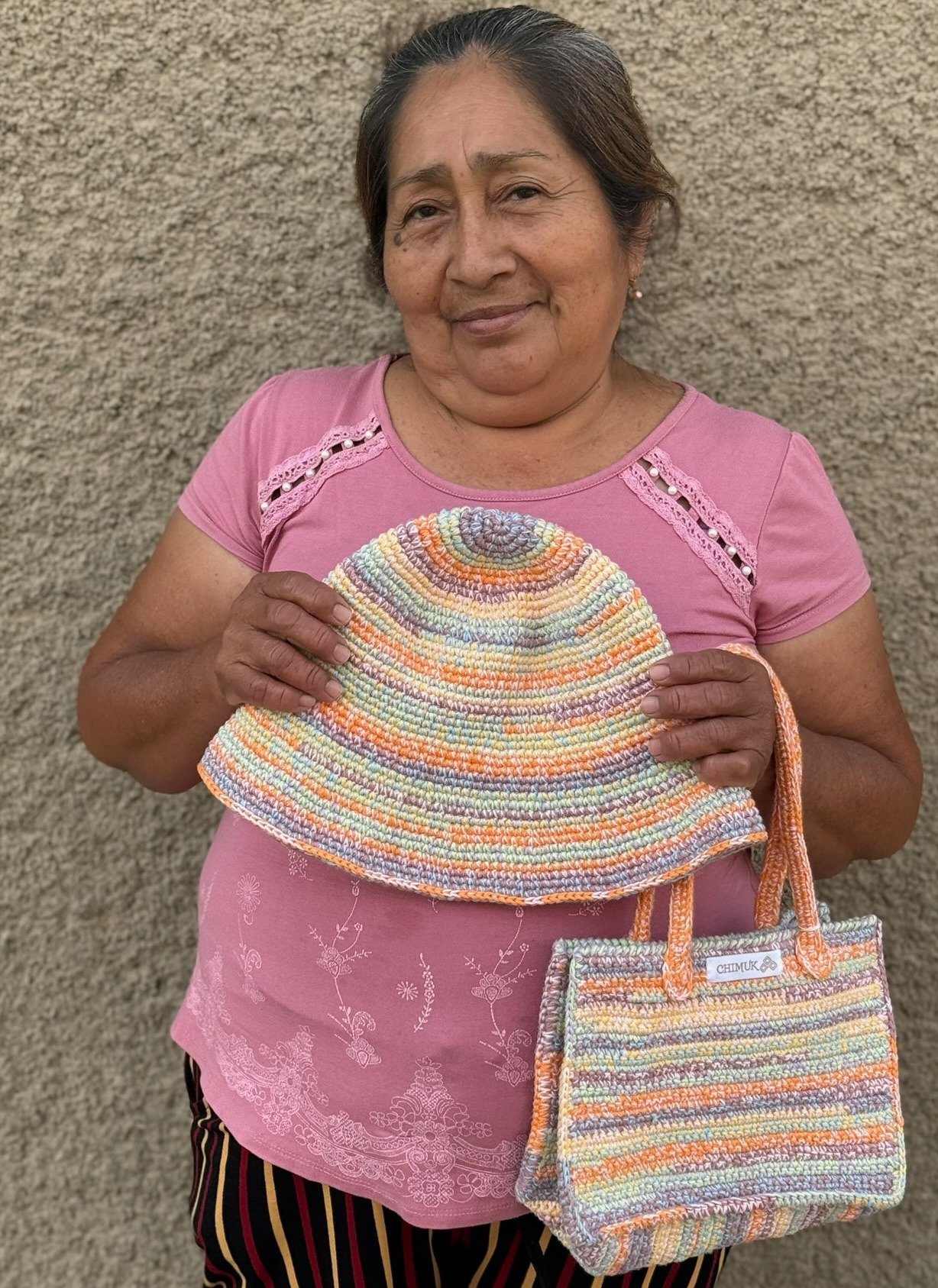
That last step is where creative freedom really lives. The combination itself has already been tested and chosen as a group, but the sequencing, the rhythm of the colors, is entirely up to the individual artisan making that particular hat. Two women working from the same bag of samples might still produce two completely different hats — same colors, different story.
A Team Effort
This is why the process feels less like solitary craftwork and more like a shared one. Spinning the yarn together, building and reviewing the sample combinations as a group - it's collaborative from the very start, long before any single hat takes shape.
By the time a hat is finished, it carries input from multiple hands: the women who spun the yarn, whoever helped settle on a winning color combination, and the artisan who chose how to arrange it.
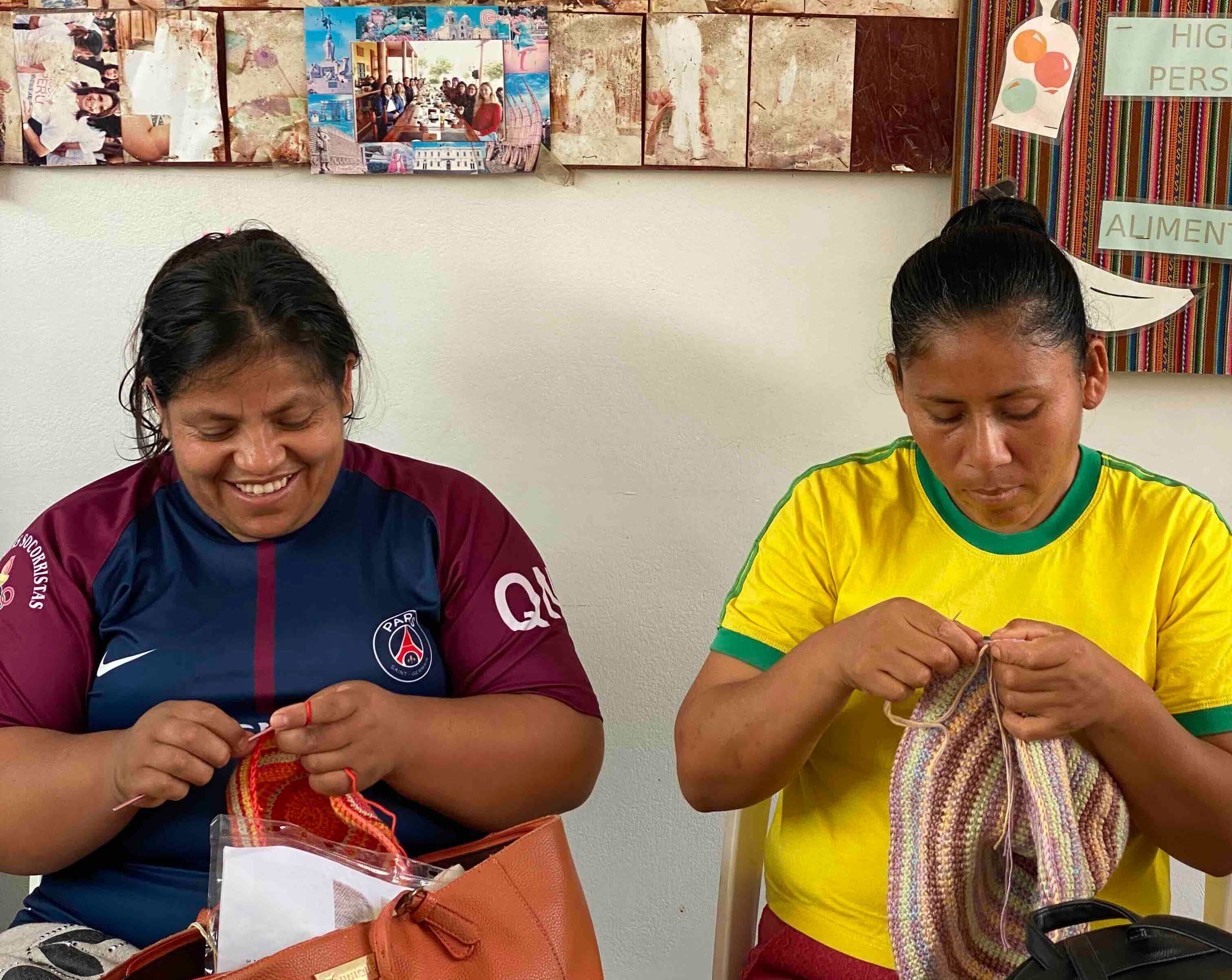
One hat, several small decisions, all before it ever gets worn.
An Unexpected Bonus: Bringing Partners In
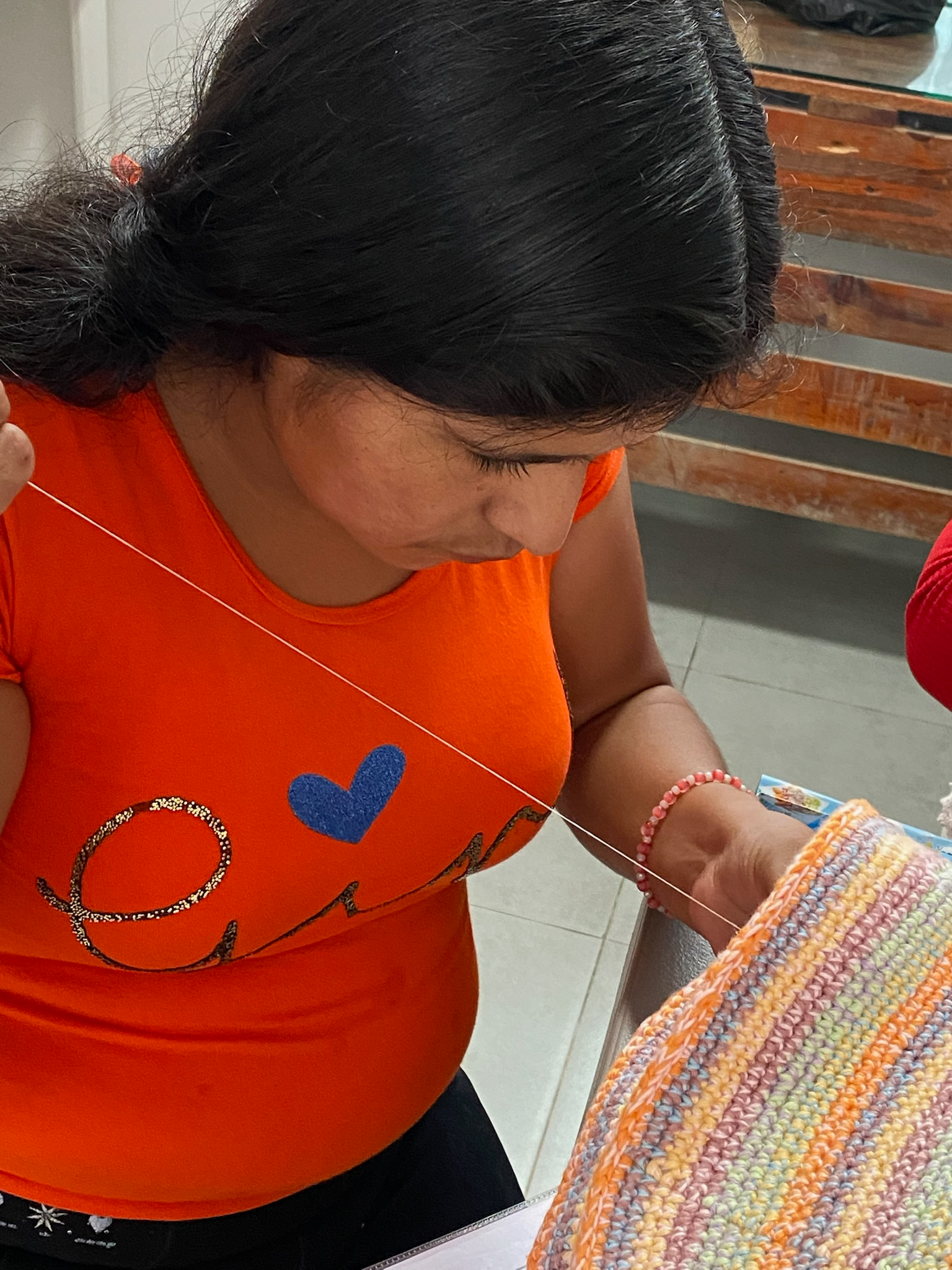
Here's the detail that surprised us most. Several artisans have told us that choosing colors has become something they share with their husbands at home - holding up yarn, asking which combination looks best, hearing a compliment on the finished piece.
It's a small moment, but it means something. The work doesn't stay separate from home life, it becomes part of it. A husband's opinion on a shade of pink, or his pride when he sees the finished hat, turns craft into something the whole household is a little bit invested in.
For many of our artisans, that's an unexpected and welcome part of the job... the work brings people closer, not further apart.
Why Sourcing Isn't Always Simple
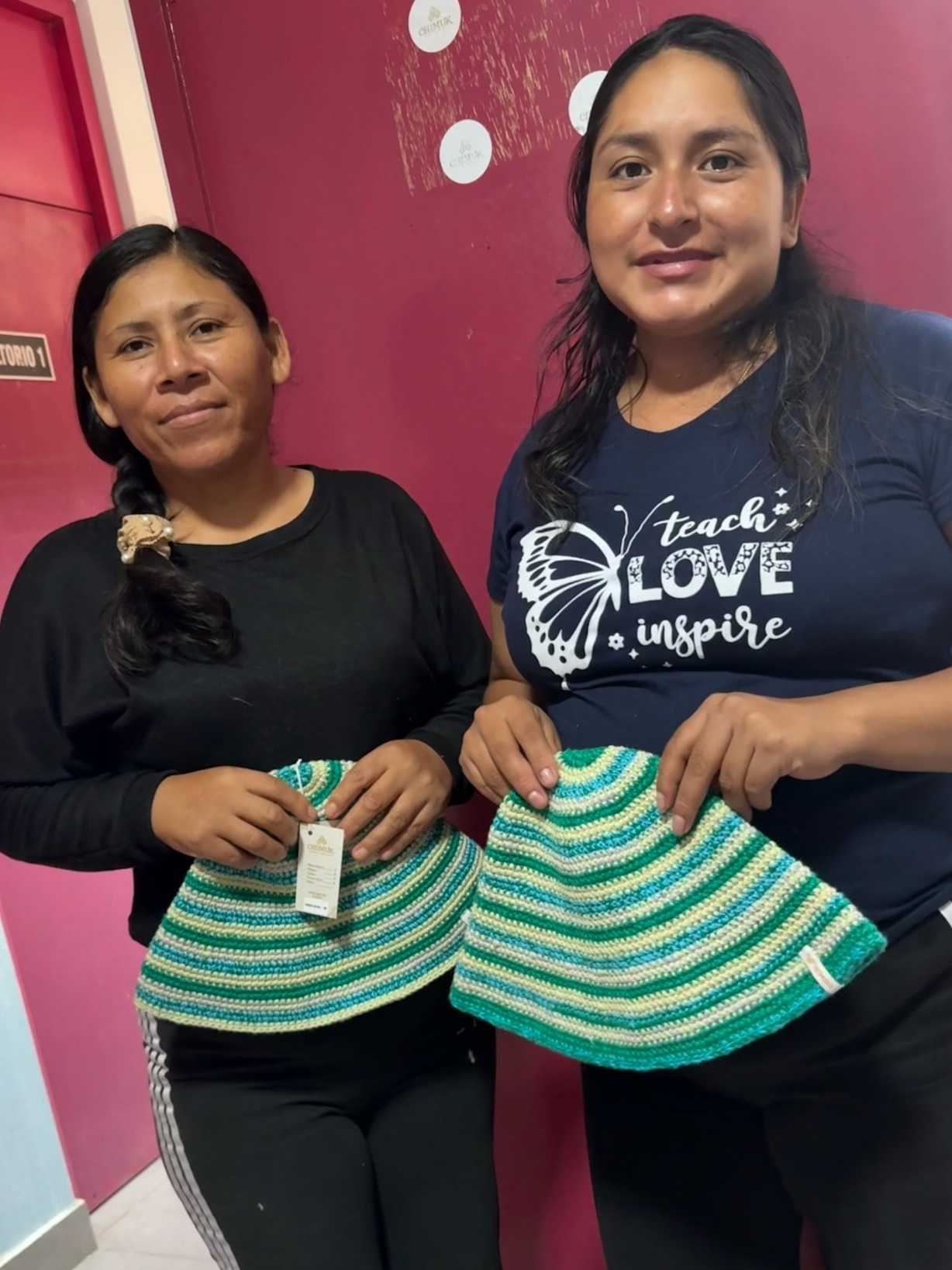
We'll be honest about something too: keeping colors consistent has been a real challenge this year.
Peruvian cotton is sourced in limited runs, and dye availability shifts — a shade we used last season isn't always guaranteed to be there next season.
That's part of why our multicolor bucket hats are made in small batches rather than mass runs. We can't always promise an exact colorway will come back exactly as it was.
Instead of treating that as a flaw, we've come to see it as proof that these hats are genuinely handmade with real materials, not manufactured to a fixed, infinite spec.
So if you see a colorway you love, it's worth grabbing while it's here. The next batch might be just as beautiful — but it won't be exactly the same.